
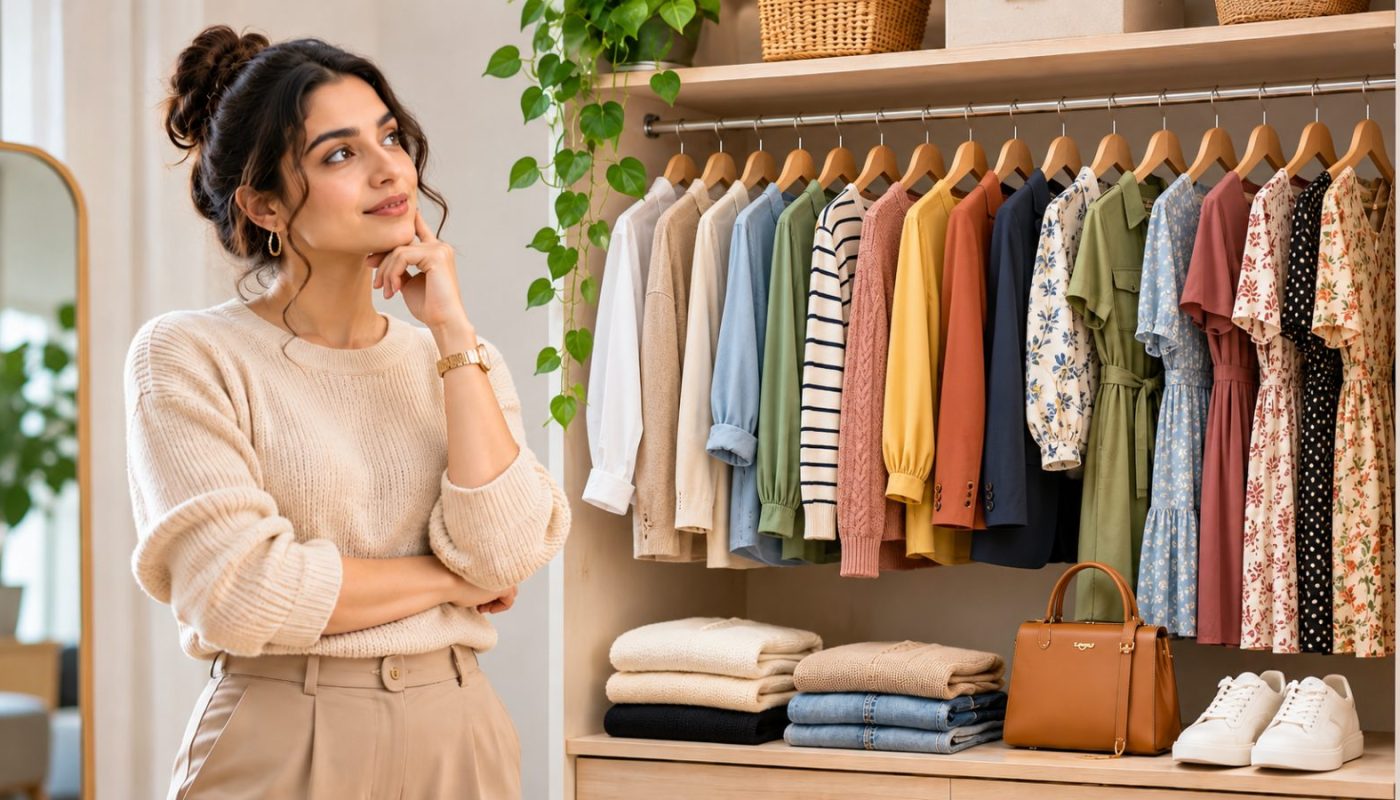
Have you ever stood in front of a wardrobe overflowing with clothes, only to feel that you have absolutely nothing suitable to wear?
The problem is rarely a shortage of clothing. More often, it comes down to owning pieces that look appealing individually but struggle to work together.
A versatile wardrobe offers a more thoughtful approach to personal style. Rather than accumulating clothes for every possible occasion, it focuses on carefully chosen garments that complement one another and accommodate different activities. With a little creativity and sensible planning, even a modest collection can provide an impressive variety of outfits.
Here are 9 practical ways to make your wardrobe more adaptable without continually adding to it.
1. Establish a Colour Palette That Works Together
A thoughtfully coordinated colour palette is one of the foundations of a versatile wardrobe. When your clothes share complementary shades, creating different combinations becomes considerably easier. Instead of spending time deciding which colours work together, you can concentrate on selecting an outfit that suits the occasion.
Begin with neutral shades such as black, cream, navy, grey, or beige, depending on your preferences. Introduce a few additional colours that complement your complexion and reflect your personality.
For instance, a pair of beige trousers can be worn with a white blouse, a navy cardigan, or a burgundy knit top, providing several combinations without requiring additional purchases.
2. Select Clothes That Suit More Than One Occasion
Some garments are particularly valuable because they adapt effortlessly to different settings. A well-fitting midi skirt, for example, can appear relaxed when paired with trainers and a simple T-shirt, yet considerably more polished when styled with a tailored blouse and elegant footwear.
Before purchasing anything new, consider how frequently you would wear it and the occasions for which it would be appropriate. Pieces that accommodate both everyday activities and occasional social engagements generally offer greater practical value. The objective is not to eliminate distinctive clothing but to ensure that most of your wardrobe serves more than one purpose.
3. Make Better Use of Matching Clothing Sets
Matching outfits are convenient because they provide an attractive, coordinated appearance without extensive styling. However, their real advantage becomes apparent when the individual garments are treated as separate pieces rather than a single outfit.
When browsing the knit set womens collection, for instance, consider how each garment might complement clothes already hanging in your wardrobe. A knitted top could work beautifully with tailored trousers or denim, while a matching skirt might pair with a crisp shirt or lightweight blouse.
4. Prioritise Well-Fitting Wardrobe Essentials
A practical wardrobe benefits from a dependable selection of essential garments. These might include well-cut jeans, tailored trousers, comfortable tops, a classic shirt, and a simple dress that can be styled in several ways. Their greatest advantage is that they provide a reliable foundation for more expressive clothing and accessories.
Nevertheless, wardrobe essentials should never be treated as a universal checklist. Someone working in a formal office will have different requirements from a person whose routine involves travelling or working from home.
Consider your lifestyle, preferred silhouettes, and the fabrics you find comfortable. A garment becomes genuinely useful when it fits properly and suits the activities that occupy most of your week.
5. Experiment With Layering to Create Different Looks
Layering allows you to reinterpret familiar clothing without making unnecessary purchases. By combining garments in different ways, you can alter an outfit’s appearance, accommodate changing temperatures, and introduce interesting contrasts in texture.
Consider a simple slip dress worn with sandals during warmer weather. The same dress can take on an entirely different character when paired with a fitted cardigan, ankle boots, and a structured jacket. Similarly, a lightweight shirt can be worn independently, layered beneath a sweater, or left open over a fitted top.
Pay attention to proportions when experimenting with layers. Combining heavier fabrics with lighter materials often creates a balanced appearance, while excessive volume can make an outfit feel uncomfortable or restrictive.
6. Use Accessories to Give Familiar Outfits a Fresh Appearance
Accessories have an extraordinary ability to alter the character of an otherwise simple outfit. A plain black dress, for example, might feel relaxed and understated with trainers and a crossbody bag. Introduce delicate jewellery, elegant heels, and a structured handbag, and the same dress becomes appropriate for an evening gathering.
Rather than collecting accessories indiscriminately, concentrate on pieces that complement several outfits. A classic belt, a versatile handbag, a patterned scarf, and a modest selection of jewellery can offer considerable styling flexibility.
Accessories also provide an opportunity to express personal taste without committing to an entirely new wardrobe. Even a different hairstyle or a change of footwear can make frequently worn clothing feel refreshingly different.
7. Choose Garments That Can Be Mixed and Matched
The usefulness of a wardrobe depends largely on how comfortably its individual pieces work together. Clothing that only complements one specific garment may have limited value, particularly when wardrobe space is restricted.
Coordinated knitted sets offer a practical example of this principle. While the matching pieces can be worn together, a knitted cardigan might also complement jeans, a midi skirt, or a simple dress. Likewise, a matching knitted top could be styled with trousers or other separates already in your collection.
Before purchasing a new garment, try identifying at least three outfits you could create using clothes you already own. This small exercise encourages more considered decisions and reduces the likelihood of buying pieces that remain unworn.
8. Organise Your Wardrobe Around Your Daily Routine
Even a carefully selected wardrobe can become frustrating when its contents are poorly organised. Clothes hidden beneath overflowing shelves or crowded hangers are easily forgotten, leading people to repeat familiar outfits while overlooking other suitable combinations.
Arrange your clothing according to how you use it. Everyday essentials should remain readily accessible, while seasonal garments and occasional outfits can occupy separate areas. Grouping complementary pieces together can also make getting dressed considerably more straightforward.
A regular wardrobe review is equally worthwhile. Identify garments that need repairing, pieces that no longer fit, and clothes that have remained untouched for months. Maintaining an organised collection makes it easier to appreciate what you already possess.
9. Develop More Thoughtful Shopping Habits
A versatile wardrobe is easier to maintain when purchases are guided by genuine requirements rather than temporary enthusiasm. An attractive discount or a popular fashion trend can be tempting, but neither guarantees that a garment will complement your existing clothes.
Before buying something new, consider the gaps in your wardrobe. Perhaps you already own several attractive skirts but lack suitable everyday tops. Addressing that specific need will probably create more useful outfit combinations than purchasing another skirt.
It is also worth considering comfort, fabric care, durability, and how frequently you expect to wear a garment. Thoughtful purchasing does not mean avoiding trends altogether. It simply means choosing new additions because they genuinely contribute to your personal style and daily routine.
Conclusion
Creating a versatile wardrobe is less about restricting your clothing choices and more about making those choices count. A carefully coordinated collection can offer plenty of variety when its individual garments complement one another and accommodate different occasions.
By concentrating on suitable colours, dependable essentials, adaptable clothing sets, and thoughtful styling, you can create attractive outfits without constantly purchasing something new. Ultimately, the value of a wardrobe should be measured not by how many clothes it contains, but by how confidently and comfortably you can wear them.


